
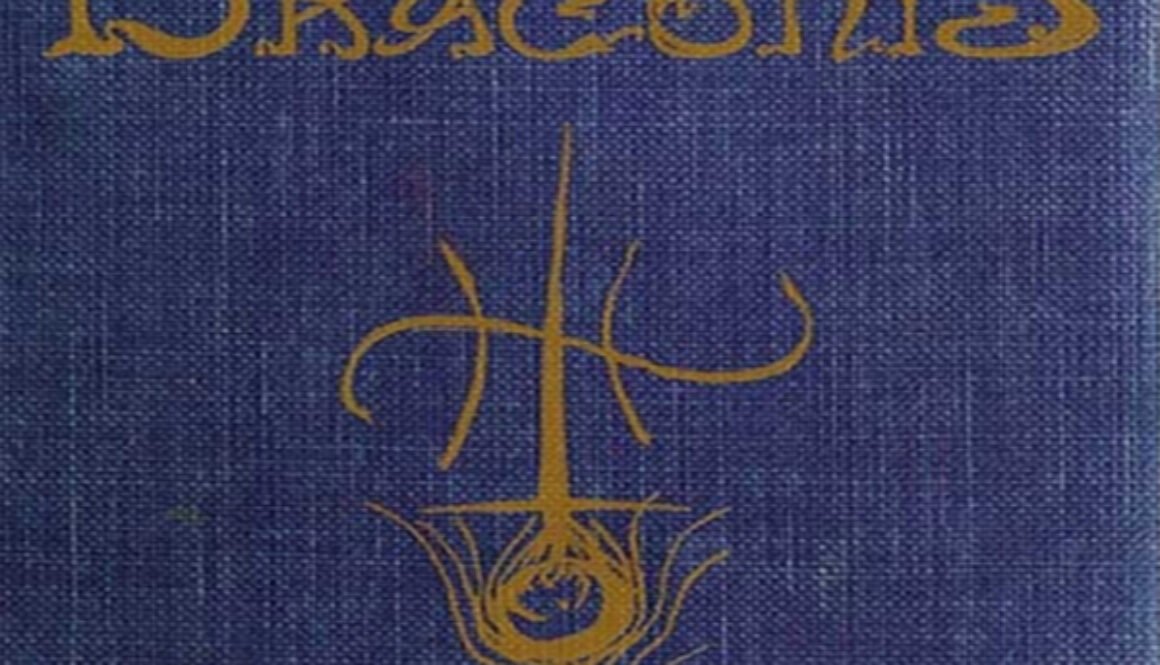
Skullflower, “Draconis” (Cold Spring, 2014)
It is hardly newsworthy to report that a Skullflower album is a blackened, face-melting fusillade of gnarled guitar noise or that it sounds like shoegaze turned occult and murderous, but Draconis still kind of blindsided me. Though it is characteristically grinding and brutally heavy from start to finish, Matthew Bowers and Samantha Davies unexpectedly balanced their caustic maelstrom with a bit more structure and melody this time around. Not all the time, mind you, but when the combination of harrowing noise and buried melody comes together just right, Draconis feels like one of the most brilliant albums in the Skullflower canon.
Draconis was ambitiously and curiously billed as “synapse-scorching occult industrial prog noise folk,” which probably does a fine job at summarizing late-period Skullflower’s inspirations, but is a bit misleading in describing the actual content, which falls much closer to “drone-damaged walls of guitar noise.” Though it thankfully has some structure (historically not Bowers’ strong suit), there is nothing here that suggests the complex, byzantine structures of progressive rock, nor is there much to suggest “folk” in the traditional sense (like, say, an audible acoustic guitar, a traditional melody, or any vocals). Instead, Draconis is mostly a series of roiling oceanic soundscapes of metallic bowed strings, throbbing low end, and smoldering guitar noise. That said, there is definitely something deeper happening as well, even if it is not overt: Draconis still somehow feels like concept album in its own weird way, evoking an otherworldly ritualistic atmosphere and occasionally blossoming into unexpected vistas of relative calm.
Unsurprisingly, the best pieces are those where Davies and Bowers augment their noise squall with some kind of perverse anti-hook. For example, “To Raise Wolves” beautiful enhances its trebly Black Metal guitars with washes of white noise and an insistently swooping “air raid siren” synth motif. Such innovations appear with far more frequency on the superior second disc than on the first, with nearly every song standing out in some inspired way. Some major highlights are the warped shoegaze guitars of “Autumn’s Trinkets” (which call to mind the smoldering ruins of a Swervedriver song) or the rippling undercurrent and howling roar of the epic and hallucinatory closer “Dakshninikalika.” The most stunning piece, however, is “Sunset Dreams,” in which the duo’s tortured, dissonantly harmonizing guitars unfold over an unrelenting, slow-motion chord progression and an omnipresent shivering hiss. The overall effect is quite an apocalyptic one: “Sunset Dreams” would be the perfect soundtrack to deserted city of collapsing buildings.
If Draconis has a flaw, it is that its many moments of sublime, alien beauty are interspersed with some rather harsh noise, which may make it a rough ride for those solely looking for warped guitar genius. Also, the best pieces on the album inadvertently call attention to the fact that the weaker pieces could have been much better if they had only incorporated some kind of additional hook or twist to the formula. Such pieces are hardly boring though—their rewards simply lie in their sheer massiveness, raw power, and textural complexity. Also, I personally enjoy harsh noise done well, so I am delighted by the idea of an excellent and blistering noise opus that periodically blossoms into something much more wonderful. Though it is undeniably very “niche,” Draconis feels like an absolute tour de force/possible career-defining masterpiece to me. This was easily one of my favorite albums of 2014 and it is still one hell of a ripper more than a decade later. Blackened grandeur at its finest.