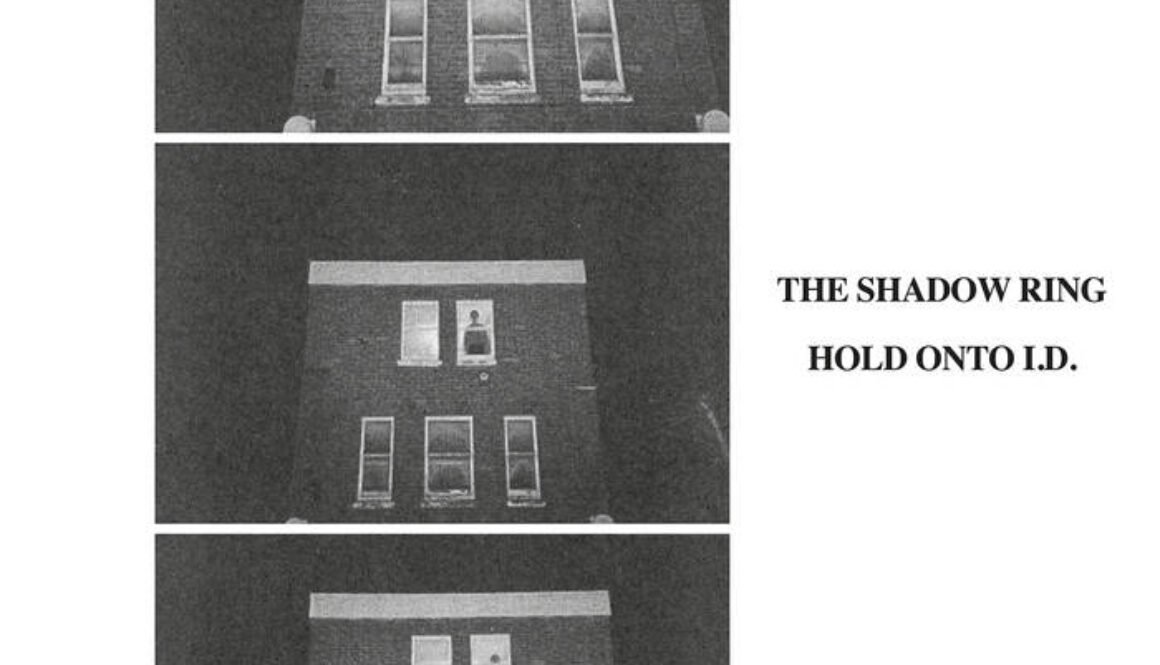
The Shadow Ring, “Hold Onto I.D.” (Siltbreeze (1997) / Blank Forms (2025))
Newly reissued, this singular 1998 album is billed as arguably being The Shadow Ring’s best-known and most accessible album, but there are a couple of important caveats to that claim. The main one is that The Shadow Ring’s entire discography had been maddeningly out-of-print for years before Blank Forms ambitious reissue campaign began and this album was the only one available on streaming platforms, so it is arguably their best-known album for reasons other than its merits alone. Secondly, accessibility is a relative thing and “most accessible Shadow Ring album” essentially means “a bit more accessible than a Jandek album.” Despite the clattering martial-style percussion on de-tuned drums, Lambkin’s discordant guitar abuse, and Goss’s queasily disorienting synths, however, this album is an improbably fun and haunting glimpse into a deeply weird and unfamiliar world.
Notably, I personally find the earlier Wax-Work Echoes to be much more musically satisfying and easier on the ears, but the more spoken word-centric Hold Onto I.D. is a fascinating and unique release in a completely different way, as it offers an unsettling and vaguely sinister account of Graham Lambkin & Darren Harris’s new life in Coombe House (a former ambulance station) after moving out of their parents’ homes (which were still within walking distance). While Blank Forms rightly describes this as the band’s “most overtly autobiographical” release, the actual reality of Coombe House is transformed into a curdled magical realist nightmare in which our two dour protagonists are continually besieged and menaced by an alarming infestation of sea creatures.
Notably, this is the Shadow Ring’s second album to feature Tim Goss on electronics and keyboards. In theory, the reduced emphasis on Lambkin’s jarringly discordant out-of-tune guitar strums seems like it should have heralded a big leap forward in listenability, but that is again not always the case here, as Goss unleashes some willfully annoying and incredibly shrill sounds in Hold Onto I.D.’s first two pieces. Also, there is still plenty of dissonant and gleefully inept guitar playing to be found. There have been plenty of bands over the years that have transcended their crap gear and lack of instrumental competence to make magic, but the Shadow Ring is not one of them on this particular album.
Fortunately, the combination of Lambkin’s half-sardonic/half-creepy lyrics and Harris’s amusingly bitter and hostile-sounding readings of said lyrics are compelling enough to make the music itself feel like a somewhat irrelevant afterthought. Apparently, Lambkin made a conscious effort to use bureaucratic language on this album, which often makes Harris sound like an incredibly disapproving government official grumbling about snails and other prominent Shadow Ring concerns. In fact, I am tempted to characterize Hold Onto I.D. as a wonderful and bat-shit crazy spoken word album that also happens to have some music.
My favorite pieces are “Coombe House” and “Like When,” but the real appeal of this album is akin to a found footage horror movie mingled with flashes of jet-black deadpan comedy (though the band repeatedly insist that it is “no occasion to laugh” and dourly add that “prawn got a bit involved”). Fittingly, “You’ve got to watch the water” is the overarching concern this time around, as Harris laments snail infestations and notes “leaving this house becomes a dream” (a sentiment that the band’s lone hapless neighbor probably echoed as well). While the aforementioned sea creatures allegedly send the band’s piano to a simultaneously watery & grisly grave at one point (no occasion to laugh again, obviously), there are also plenty of amusing and pseudo-autobiographical details that suggest Coombe House is not entirely an unending nightmare. For example, Harris proudly notes at one point that he can now cook whenever he wants or open any window at any time he wants and further notes that “the washing up gets done” (“aided and abetted by brushes and things”). Concerned listeners will also be relieved to learn that “there are no dictators anymore over fat-free milk.”
There is also a good deal of deadpan meta-commentary on the album itself, as a microphone abruptly quits and vows “to work with better bands” at one point. Harris also drolly notes “I am not concerned with the music tying in with the words—not now…and I never was that bothered before.” Lambkin also throws some wonderfully groan-inducing dystopian jokes into the lyrics, as “Basic Everyday Life” finds Harris warning of a future in which fish are only caught in “internets” and robots determine whether you have chicken or tripe for dinner. They also arguably break the fourth wall at the end of “Coombe House,” as Harris grimly insists “black out…NOW.. Do it now.” Of course, that may have instead been directed at Harris himself by Lambkin (he DOES stop speaking for the song’s final minute).
While I can certainly see why the aforementioned disgruntled microphone sought refuge elsewhere, Lambkin, Harris, and Goss were really onto something quite amazing on this release: every time I listen to the entire thing, I get sucked deeper and deeper into The Shadow Ring’s mind-bending rabbit hole of dissonance, rot, and improbable apartment problems. I think that makes this some kind of outsider masterpiece, as my deep immersion in this album this week has left me feeling like a half-mad resident of Coombe House myself (though I am thankfully not yet fearful of my shower drain).
Listen here.