
The Tear Garden, “Astral Elevator” (Artoffact, 2025)
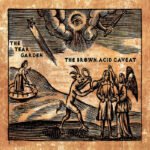
I was definitely not expecting a new Tear Garden album this year, but Edward Ka-Spel and cEvin Key’s fitful four-decade collaboration has happily resurfaced once again after an eight-year hiatus. I am tempted to call Astral Elevator a return to the duo’s “classic” sound after the more eclectic and playful The Brown Acid Caveat, but the only real difference is that this latest batch of tightly edited and hook-heavy “singles” has been purged of the more groovy and disco/dance elements of its predecessor. I suppose that makes Astral Elevator a somewhat darker release, but the world is now a darker place then it was back in 2017 and there are a handful of highlights here that certainly brighten my small part of it.
As is often the case, The Tear Garden’s usual cast of characters (Key and Ka-Spel) is expanded with some contributions from both the Legendary Pink Dots and Skinny Puppy camps (Randall Frazier, Dre Robinson, and the late Dwayne Goettel) this time around. Notably, however, the duo have also enlisted artist Cory Gorski to make videos for the album’s singles and he wove some very impressive surrealist magic with his vision for the lead single “A Return.” Someone should really give these guys a few million dollars to make a The Wall-style animated epic.
Trippy stop-motion paper mache visuals aside, “A Return” is a solid representation of what to expect with this album: synth-heavy electronic pop with lilting, melancholy vocals and an anachronistic bit of chamber music atmosphere. I suppose the same could be said of many Legendary Pink Dots releases as well, but Ka-Spel’s more freewheeling and baroque psych tendencies are beautifully balanced out by Key’s talent for tight and punchy electronic music production (with some help on the mixing/mastering end from Greg Reely). The buzzing and throbbing low end, pounding synth-drums, and the synth solo in “A Return” are all quite nice as well.
As a long-time fan, Tear Garden business-as-usual is generally just fine by me, but there are a few pieces here that transcend my expectations quite impressively as well and they are my primary evidence that this creative union remains as vital and relevant as ever. “War Crier,” for example, is easily one of the most poignant and bittersweetly heartbreaking pieces that Ka-Spel has ever recorded (I especially enjoy the pregnant pauses that he throws into lines like “they wish that they could believe…in something”). Wisely, the music is mostly kept to just a minimal and subdued simmer of shuffling drums, deep bass, subtle psych touches, and streaks of lush dream-pop synths, as Ka-Spel’s wounded Romanticism deserves the entire spotlight and gets it.
Elsewhere, “Unreal” is an especially fine example of Ka-Spel’s “hallucinatory soundscape” side, as a female AI delivers a timely and sardonic monologue about paranoia and the nature of being human that culminates in a looping accusation of “explain yourself: are you authentically artificial?” over an abstract backdrop of ominous dark ambiance, squiggling and bubbling electronics, and clattering percussion. As always, Edward Ka-Spel remains an unusually clear-eyed and scathing observer/critic of our accelerating slide into a technological dystopia.
As for the remaining pieces, they are a solid enough batch with a couple of other gems (“Lady Fate” and “Always Take the Highway”), but their pleasures tend to be less about Ka-Spel’s songwriting genius and more about cool arrangements, specific passages, and inspired musical ideas. For example, “It Just Ain’t So” features an impressively propulsive industrial groove fitfully gnawed by lysergic swells of abstract electronics, while the driving and muscular throb of “A Developing World” is nicely enhanced by breakbeat eruptions and dubby percussion and vocal effects. Unsurprisingly, Ka-Spel has some great lyrical moments as well, as both “War Crier” and “In The Name Of” feature some lines that hit like a gut punch.
Overall, Astral Elevator is an unusually strong Tear Garden album. While their early albums like The Last Man To Fly will always have a special place in my heart, there is no denying that the duo have gotten a lot better at tightening and sharpening their sound over the years (and have also reined in some of their more indulgent tendencies). They did not get rid of ALL their indulgent tendencies, however, as “Chow Mein” is certainly an endearingly weird curveball. While there are also a few less successful pieces to be found that can be reasonably described as “dubious experiments” or “not quite fully formed songs,” those rare lulls and meandering moments are largely eclipsed by the fact that Tear Garden are functionally an unwaveringly interesting, unique, and eclectic band. Moreover, Ka-Spel and Key clearly spent an enormous amount of time crafting these pieces into a richly layered and immersive experience worthy of two such iconic underground music lifers.
Listen here.