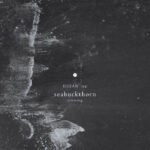
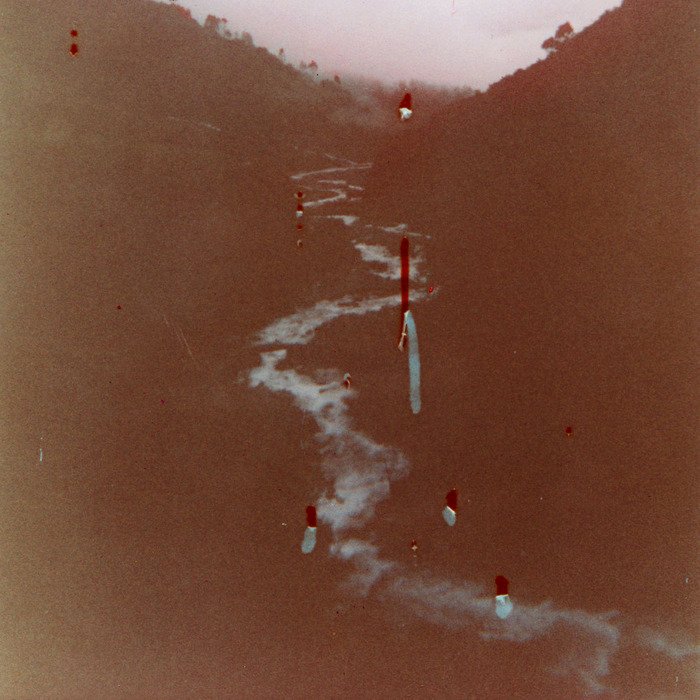
Seabuckthorn, “Never the Same River” (Lost Tribe Sound, 2026)
This newest album from French Alps-based composer Andy Cartwright is billed as “Seabuckthorn’s most rhythmic effort to date,” as he inventively transforms simple hand percussion and kitchen pans into hallucinatory and ritualistic rhythms with a host of time-stretching, pitch-shifting, and fragmenting production techniques. The album’s title is, of course, a reference to the timeless adage “no one ever steps in the same river twice, for they are not the same person, and it is not the same river,” as Cartright found himself noticing how the landscape of his daily mountain walk subtly changed from day to day. It is certainly an apt title, as the obvious parallel here is that this iteration of the Seabuckthorn’s vision still features all of the same wonderfully haunted rustic folk dreamscapes as other recent Seabuckthorn albums, but they now feel very different due to their unusual percussion elements. The same could be said of the percussion itself, as Cartwright’s modest array of toms, woodblocks, and chimes are psychotropically reshaped into something akin to the “sci-fi tribal” aesthetic of Rapoon and Zoviet France.
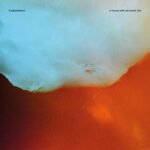
In hindsight, last year’s A Path Within A Path album offered a teasing glimpse into this project’s imminent evolution, as the slow-motion, ritualistic percussion of the Dean McPhee-featuring highlight “Shadow of the Land” would feel right at home on Never the Same River. In keeping with that theme, this album’s big guest (William Ryan Fritch) lends his talents to a similarly great piece, as “Things We Cannot See” blossoms into a ghostly, slow-motion waltz with a languorously sad and sensuous violin/viola melody.
Appropriately, Cartwright never revisits that same river, as his seamless assimilation of wide-ranging influences continually conjures compelling new rhythmic twists. In “His Mind Was a Blizzard,” for example, there is a Spanish guitar/flamenco feel with a stomping pulse that approximates a darkly sexy enhancement of the desert psychedelia of Ak’Chamel and the Bishop brothers. Elsewhere, “Mumbo Jumbo” gradually evolves from a buzzing Indian raga with stumbling percussion into a haunted folk dance with subtly beautiful violin harmonies and swoops. The scraping and clattering percussion of “Spinning Totem” is great as well, as it approximates a slow-motion game of ping-pong, but the best part comes at the end when everything dissolves into hypnotically undulating ambiance.
Cartwright’s seemingly bottomless bag of tricks extends far beyond the percussion realm, however. For example, the Appalachian-sounding banjo reverie “Once A Flood” feels like it is enveloped in a pulsing supernatural mist, while the Arabic-sounding acoustic guitar motif at the heart of “If There Was Another Way” stutters and pans in wonderfully hallucinatory fashion before transforming into a gorgeously warm and rippling ambient coda. In fact, the album’s trippy unreality only deepens as the album unfolds, as the final pieces unexpectedly reveal an elegiac brass ensemble (“Weather en Route”), string flourishes that resemble ululating or yodeling (“Luck Intervenes”), and a broken- and rusted-sounding strain of exotica that seems to feature slowed-down field recordings of a chorus of frogs (“After the After”).
While there are admittedly no individual pieces here that quite rise to the heights of past stunners like The Crossing’s “To Which The Rest Were Dreamt,” an extremely convincing case could be made that Never the Same River is actually the strongest Seabuckthorn album to date, as these beautifully immersive, evocative, and sublime pieces feel like a series of scenes from a haunted and psychedelic Western set deep in the Australian outback or somewhere similarly desolate and devoid of humans (like perhaps the view from the top of a French mountain). I was also a bit blown away by Cartwright’s production prowess, as he consistently exhibits an intuitive genius for visceral textures and dynamics, spatial movement, and spacious/uncluttered arrangements that mirror a wide-open sky. While the omnipresent sense of encroaching darkness and bleary unreality also rank among the album’s central pleasures, Cartwright’s finest achievement lies in how masterfully this unique spell is sustained and how beautifully he conjures the natural/primal beauty of an alluringly pre- or post-human world.
Listen here.