
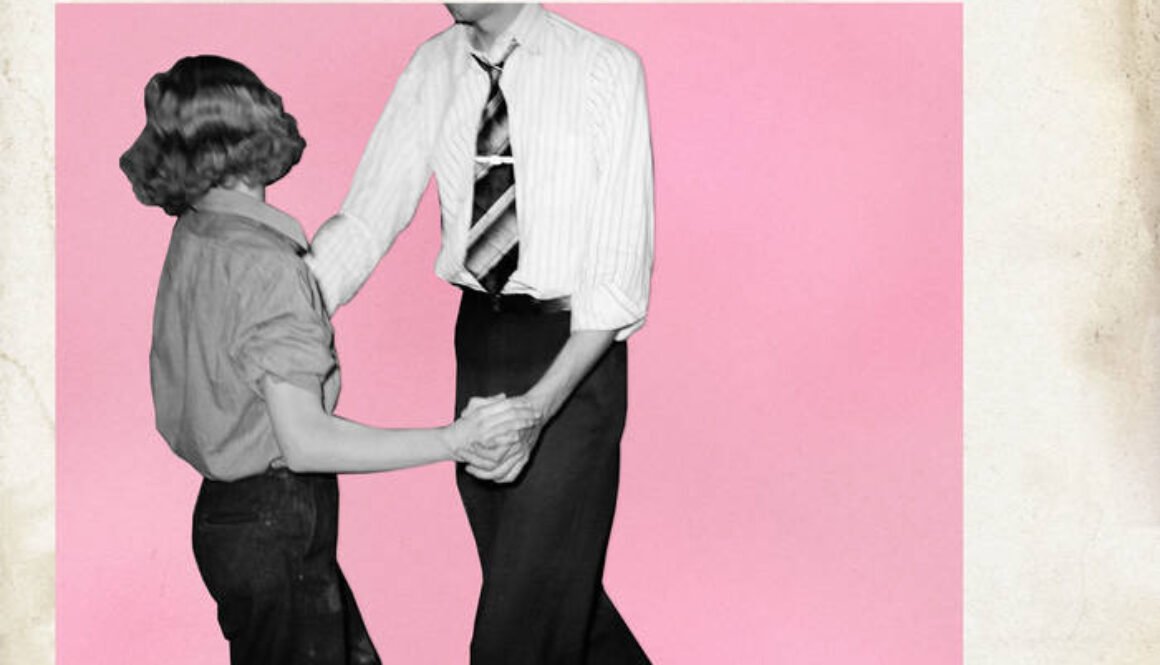
Hilary Woods, “Night CRIÚ” (Sacred Bones, 2025)
This latest solo album from this Irish composer/filmmaker is an impressively radical and revelatory reinvention of her sound—especially for me, as I was only previously familiar with Woods’ more dark and gnarly instrumental work (Feral Hymns, Acts of Light, etc.). As it turns out, however, Woods has had a considerably more eventful career than I had imagined, as she joined JJ72 as a teenager and enjoyed some legitimate pop chart success before retiring from music to raise a family in 2003. While she was away, however, she became increasingly immersed in both film and electronic music and finally re-emerged as a solo artist in 2013 for a very different second act.
In some ways, Night CRIÚ marks a return to the stark and hushed vocal-centric work of 2014’s Night EP, which makes sense as many of these songs began their life as home recordings, but the similarities to Woods’ early solo work are eclipsed by her remarkable evolution as both a composer and arranger. Some credit certainly goes to frequent David Lynch collaborator Dean Hurley, who handled mixing duties and encouraged Woods to make her vocals the central focus, but she absolutely embraced that idea and distilled her musical backdrops to little more than just slow-motion drums, some strings, and a whole lot of hissing and crackling textures.
In a rough sense, Liz Harris’s Grouper project is the most obvious reference point (hushed, intimate, reverb-soaked, and shadowy), but these pieces feel far more indebted to more timeless fare (hymns, traditional music) than by any of Woods’ contemporaries. The production may be contemporary, but the instrumental palette is frequently little more than just a voice and a violin or cello. Woods is also a more playfully eclectic artist than I had anticipated, as she throws plenty of stylistic curveballs into the mix to keep things lively and endearingly unpredictable.
In a recent interview for The Wire, Woods observed that the album’s title “embodies everything” and elaborated that the night is when our guarded public persona dissipates and other personas get a chance to blossom and process the thoughts and threads of the day. The Gaelic word CRIÚ unsurprisingly has a very similar meaning to the English word “crew,” so the obvious interpretation is that Woods’ various nocturnal personas all get their chance to stretch out and breathe here.
However, I like to interpret it in a broader way as well, as it amuses me to imagine an eclectic crew of night people sneakily converging to make a killer album after everyone else has fallen asleep. In Woods’ case, that night crew happens to include a percussionist, a flautist, and cellist, but also seems to include a children’s choir and an entire goddamn marching band (both roles apparently covered by Brighton’s Hangleton Youth Band). Novelty aside, the inclusion of the Hangleton bunch was a legitimately inspired idea, as their appearances always add a welcome splash of color that beautifully balances out Woods’ more haunted and witchy impulses.
The most beautiful iteration of Woods’ vision is the opening “Voce,” as her hushed and hopeful vocal melody sensuously floats above a minimalist backdrop of just droning strings and the steady pulse of a slow-motion and skeletal beat. Notably, Woods wrote most of these songs on guitar, then decided to cut out nearly all of the guitars for the finished pieces, which creates a very cool effect in which there is a spectral instrumental structure and a whole lot of space for various small flourishes to make a deep impact.
In “Voce,” for example, that vacuum is filled with frayed trills, a great sliding string motif, “Kashmir”-esque string flourishes, dubby percussion effects, and an absolutely gorgeous use of a children’s choir. Elsewhere, “Endgames” is another stunner, as the sibilant, eerie verses and groaning/snarling strings pack quite an intense and seething emotional punch (though the warmer, more radiant chorus does let in some welcome light).
The hymn-like closer “Shelter” is a sublime highlight as well, but there is not a single piece on the album that does not feature either an inspired idea at its heart or an extremely cool arrangement. For example, “Taper” sounds like a pair of somnambulant twins making haunted outsider country music, while the brooding and shadowy “Brightly” briefly blossoms into a lush waltz when the chorus hits and features some achingly lovesick Eastern European-sounding violin flourishes as well.
Naturally, the Hangleton Youth Band makes several additional appearances throughout the album and Woods texturally enhances everything with a patina of field recordings, tape hiss, crackle, and film projector sounds, but such enhancements are largely a secondary pleasure, as Night CRIÚ would still be a great album even if absolutely everything was carved away to leave behind only the enigmatic poetry of the lyrics and the sensuous beauty of the vocal melodies and harmonies.
That said, Woods has also made a couple of videos for this album and they too feel like an essential part of her vision (she is also a filmmaker, after all), as the flickering slow-motion dancing, found footage family memories, archival track & field scenes, and endearingly Arbus-esque masked children both warm and deepen the emotional impact of the songs. Hopefully, Woods will manage to someday make videos for the other five songs as well, as the convergence of her visual art and her music is truly a thing of beauty. In the meantime, this album is often a thing of beauty as well.
Listen here.