
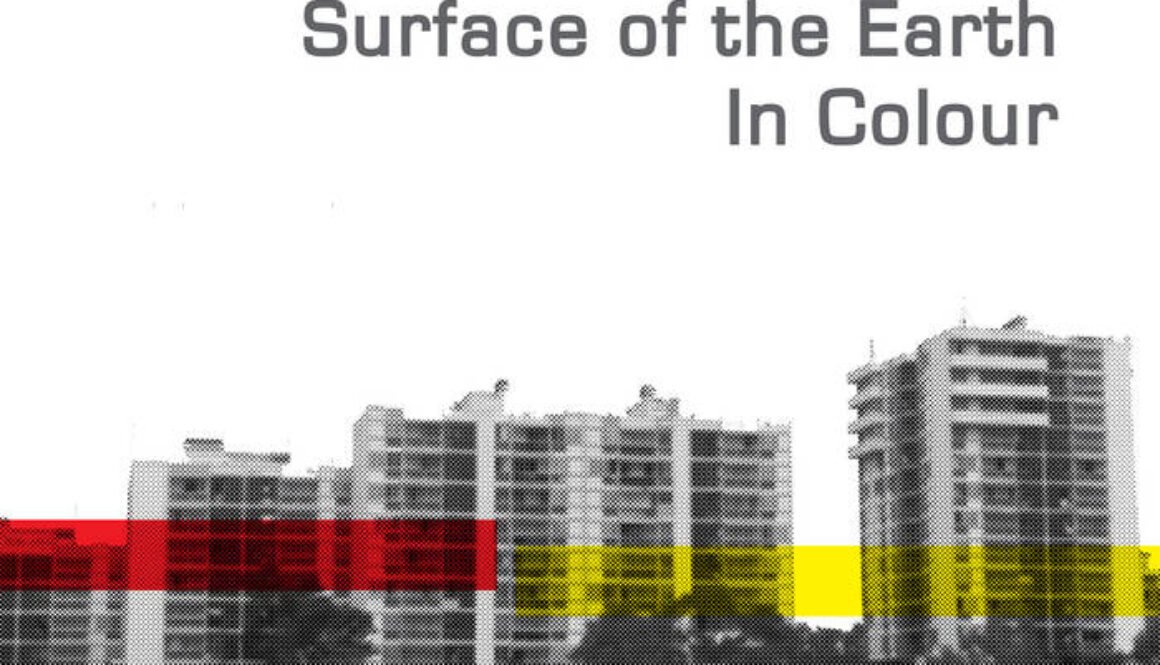
Surface of the Earth, “In Color” (Knotwilg, 2025)
Inspired by the shambolic rock deconstructionism of their countrymen The Dead C, this Wellington-based trio of guitar noise enthusiasts quietly released their self-titled debut on cassette back in 1995. While it generated enough excitement to warrant a lathe-cut vinyl reissue a year later, only 30 copies were made and the band seemed destined to remain damned to obscurity forever…until the album was resurrected again in 1997 by Bruce Russell’s celebrated Corpus Hermeticum imprint. Since then, that debut has been reissued several more times and has gradually attained a well-deserved status as an underground classic and one of the defining releases of New Zealand’s “Free Noise Movement.” Aside from a long out-of-print follow up on the (now inactive) Fusetron label in 1997, however, that now-iconic debut was pretty much the beginning and end of Surface of the Earth’s story…until now.
I cannot think of many other artists who have had a three-decade gap between albums and still manage to re-emerge at the height of their powers, but I suppose Surface of the Earth is not like many other bands. Unsurprisingly, this trio of Tony McGurk, Donald Smith, and Paul Toohey shares a lot of common ground with other New Zealand noise weirdos like The Dead C and Sandoz Lab Technicians (feedback, guitar abuse, amp noise), but even The Dead C have some conventionally “rock” elements like drums, songs, and vocals. Surface of the Earth make no such concessions to wider accessibility, as their work is considerably more drone-minded and minimal and the ensuing thirty years seems to have only heightened those tendencies.
In fact, the band’s palette on In Color is almost entirely reduced to amplifier hum, feedback, crackles, scrapes, and other “non-musical” sounds such as the occasional crash of a jostled amplifier’s reverb. Occasionally someone will actually play a few notes, but that seems to be mostly for harmonic coloration (and to generate more feedback and oscillation, of course). While the band do not mention their gear at all on this latest release, their debut was assembled from improvisations using “two microphones, a cassette deck, and a ragtag heap of equipment that included walkie-talkies, a nylon-stringed classical guitar, and dictaphone recorders as well as low wattage amps and synthesizers” and there are no obvious indications that they have changed that approach.
Admittedly, it took me several listens to fully warm to this album, as it is lean on immediately gratifying highlights like the debut’s “Voyager” or “Sea of Japan,” but I eventually realized that In Color has its own killer (if understated) highlights and that it is an extremely cool album in a bit of a different way (an evolution, if you will). In fact, I liken these ten songs to a series of sunrises: they may all have different moods, but they each feel like streaks of color gradually blooming from a minimalist backdrop of amplifier hum or a simple drone.
The opening “Prototype” is a prime example of that sunrise effect, as industrial hum, crackle, quietly whining feedback, and percussive guitar manipulations suddenly blossom into vivid color once a warm chord fades in around the one minute mark. Unsurprisingly, that bliss is fitfully disrupted by feedback ghosts and snarls of guitar noise and that is the fundamental beauty of In Color: subtle streaks of color organically and spontaneously carved through by visceral and sharp-edged snarls of feedback & splutters and scrabbles of distorted ruin. Almost every piece repeats that feat of sorcery and the “sunrise” vibe ranges from rain-swept seaside to gentle snowfall to summer beach, but the strongest pieces also tend to feature a little something extra.
For example, my favorite piece (“Inquest”) combines cold industrial hum, harsh buzzes, and some truly gnarly and smoldering feedback squall to gloriously ugly effect. In fact, it sounds like someone unleashed such a demonic guitar sound in an abandoned factory that it reawakened some long-dormant alarms (“get out while you can-this guitar sound is simply too sick for human ears!”). Elsewhere, “Insulator” is another favorite, as the throbbing drone gradually fades away for a final stretch that feels I am standing near a hissing sprinkler while distant bombs (of amp noise reverb) fitfully illuminate a dark horizon.
That said, there are also several pieces that do not reveal their full beauty until the moments after their climactic blossom of color has mostly faded away and that’s a trick that I have yet to get tired of. In fact, the more I listen to this album, the more quietly brilliant it seems, as it is an absolute feast of nuanced and unconventional guitar manipulations shaped with both incredible control and quite a bit of help from the ghosts in the machines (hum, crackle, feedback, etc.).
If I may brazenly flog my hackneyed sunrise metaphor one last time, that element of chance is a large part of what makes In Color so beautiful and sublime when it hits, as I know that I am hearing a mostly unplanned and ephemeral moment that can likely never be recreated again. While fans hoping for the more Sunn O)))-adjacent pleasures of the debut will probably miss the heavier vibe of the band’s debut, In Color is likely to be pure guitar noise/sound art heaven for adventurous listeners willing to throw on some headphones and let themselves get fully immersed in these quiet storms of inspired gear abuse.
Listen here.