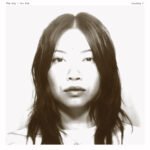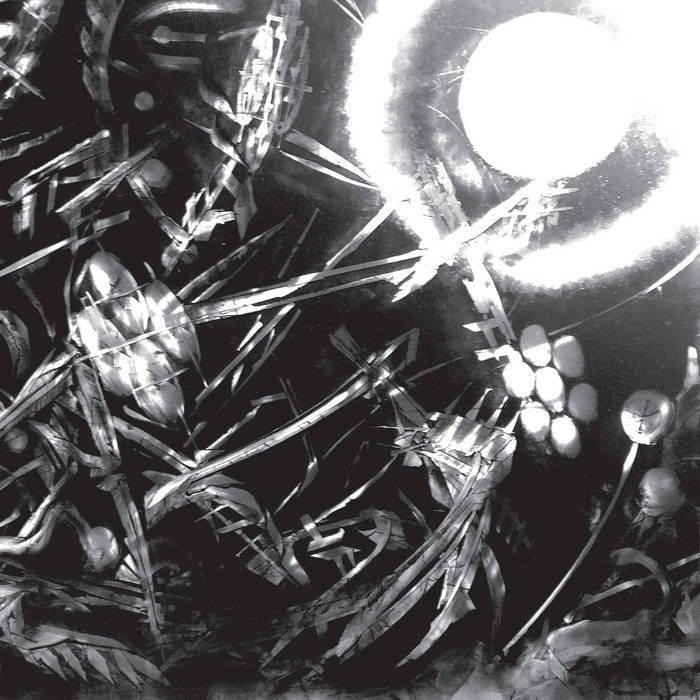
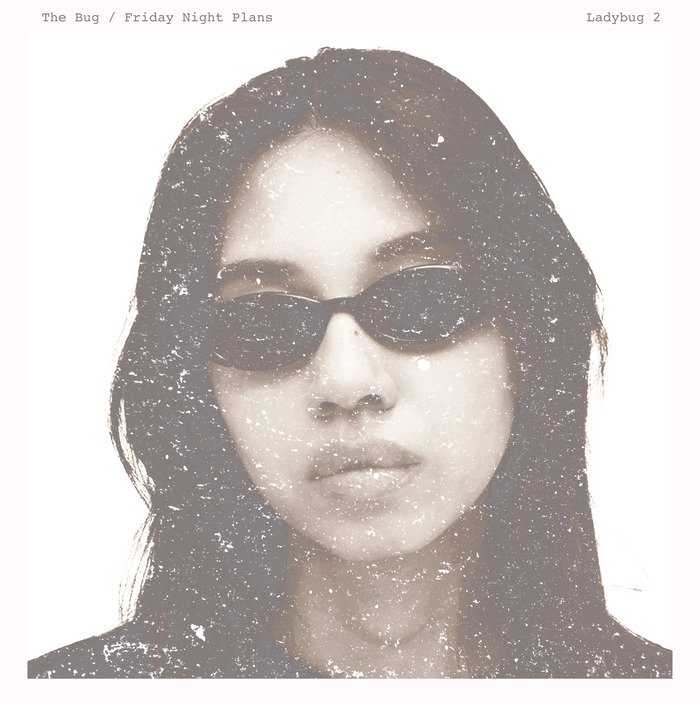
The Bug / Friday Night Plans, “Ladybug 2” (Pressure, 2026)
This second installment of Kevin Martin’s Ladybug series pairs the Brussels-based producer with Tokyo-based torch singer Masumi Yamamoto. While this single was my first exposure to her work, Martin has been a fan of her Friday Night Plans project since at least 2023, as he proclaimed her Visitors to be his favorite album of the year in Boomkat’s annual artist list extravaganza. Given that Martin himself is again the driving force behind the music and the production, Ladybug 2 understandably shares a lot of stylistic similarities with the previous Dis Fig installment (haunted vocals, spartan instrumentation, long ghost trails of hissing decay, and big post-industrial vibes), but the trip-hoppier aspects land closer to Portishead than Massive Attack this time around. Or, as the album description more colorfully puts it, “a dream journey from Twin Peaks to Kingston, Jamaica, via Bristol.”
The single this time around is entitled “Miss U” and it roughly sounds like a stripped-down Portishead performing in a cavernous industrial space. Aside from the fact that Portishead are one of Bristol’s many iconic trip-hop pioneers, however, the resemblance mostly comes down to just the sound of Masumi’s voice and a pervasive vibe of ghostly slow-motion heartache. Pressure’s perceived Twin Peaks element likely comes from Masumi as well, as her solo work can sometimes resemble a bleary and nocturnal Julee Cruise-style chanteuse time-stretched and blurred into ambient dub. With Martin at the controls, however, the musical palette is reduced to just a slow-motion kick drum stomp, a clap, a high hat, deep sub-bass, and a pair of frayed and stormy dub chords. In theory, the existence of those chords makes Ladybug 2 a bit more musically expansive than its predecessor, but in practice it feels similarly stark because the bass line is much less central.
In time-honored dub tradition, the vocals are the most prominent disappearing act in the five versions that follow, but they persist in one form or another for the first three variations. In the “Missing Dub” version, for example, Masumi’s voice is reduced to a few echoing phrases or snatches of melody, while the “Broken Mix” takes the vocals in a more spectral and eerily harmonized direction that flickers in and out of focus like a supernatural visitation. My favorite variation, however, is the “Broken Dub” as Masumi’s elusive and murmuring voice leaves behind hissing vapor trails that form a pulsing psychedelic cloud. In the vocal-less “Broken Beat” version that follows, Martin pulls off a similarly cool trick by transforming the lingering decay of the chords into a hissing and reverberating fog.
Martin’s angle on the closing “Broke Dub” is a bit more abstract, as he seems to play up the urban field recording textures that mostly lurked in the background to impressively evocative effect (hissing car tires, whooshing trains, a honking traffic jam that seems to morph into church bells). It makes a perfect finale, as the most mesmerizing aspect of this maxi-single is how vividly it conjures the image of empty trains streaking through a bleak and brutalist industrial landscape of hulking concrete, desolate streets, and heavy black clouds. While I think the strength of “Miss U” itself is roughly comparable to Dis Fig’s “Vanishing,” Ladybug 2 is a stronger release overall because it feels more like a sustained immersion in a trippy and dystopian sci-fi noir than a mere collection of heavyweight dub bombshells.
Listen here.