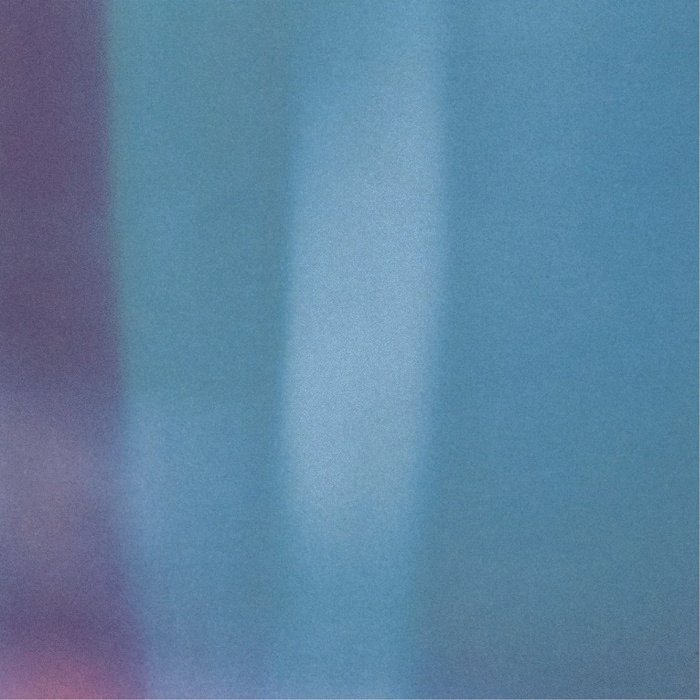
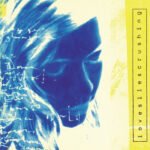
Originally released on Projekt back in 1996, the newly reissued xuvetyn was the second album from the (then) Arizona-based duo of visionary guitar sorcerer Scott Cortez and vocalist Melissa Arpin-Duimstra. Notably, lovesliescrushing’s debut album bloweyelashwish completely blew me away when it came out and still remains one of my favorite albums to this day.
Consequently, I had extremely high hopes for its follow up, yet xuvetyn felt like a bit of an overlong, amorphous, and comparatively regressive misstep to me when it was first released. Notably, however, Cortez has since revealed that 90% of xuvetyn was actually recorded before bloweyelashwish and that he worked on both albums concurrently. He simply chose to release bloweyelashwish first because xuvetyn was too “strange” for a debut album.
I personally think that both albums are pretty damn far out, but I cannot fault his logic, as bloweyelashwish is an album that instantly makes a deep impression (and comes closest to Projekt’s goth-centric aesthetic) while xuvetyn is more of a vaporous and understated mood piece. Also, the ambient music landscape of the early ‘90s was admittedly pretty shit until albums like Selected Ambient Works II finally steered everyone away from churning out lame-ass chillout albums.
Significantly, however, xuvetyn was clearly the album closer to Cortez’s heart, as even to this day he remains fascinated with cheap and broken gear and the weird and the unintended sounds that it can produce. While bloweyelashwish was all about vividly shimmering and roaring blossoms of guitar noise, xuvetyn sounds like those sounds played on slowed tapes, submerged in tape noise, or willfully EQed into a murky rumble.
If lovesliescrushing primary inspirations are beauty and decay, this is the album in which Cortez most enthusiastically celebrates the latter, as every sound is gleefully blurred, stretched, and submerged in some way. That is certainly a laudable objective, as much of my favorite music these days is hiss-soaked and static-veiled and Cortez himself probably inspired a decent amount of it. However, the catch is that the patina of sonic ruin buries and blunts all of this album’s hooks and melodies, so there is not much to grasp onto here other than the narcotic nocturnal atmosphere.
As it turns out, however, quite a few fans have seen things differently over the ensuing three decades and xuvetyn has gradually come to be hailed as a shoegaze masterpiece in its own right. In fact, many even believe that it surpasses bloweyelashwish. Revisiting it now, I still find myself a bit underwhelmed, but I am considerably more appreciative of Cortez’s efforts to transcend his earlier My Bloody Valentine worship inspirations to forge a more unique path. And while I still think the more MBV-indebted bloweyelashwish remains his creative zenith, xuvetyn certainly has some real allure of its own and the gift of hindsight reveals that it turned out to be an unexpectedly prophetic and influential release.
The biggest difference between xuvetyn and lovesliescrushing’s debut is, of course, that Cortez stepped away from prominent melodies and song-like structures and into a more “ambient” vision, but he also took a sizable step away from rapturous and shimmering bliss-outs and warped music box motifs to plunge into more submerged, smudged, and blown-out abstraction. Weirdly, xuvetyn also feels conspicuously lo-fi by comparison despite the fact that Cortez purportedly used roughly the same gear for both albums: a 12-string guitar, a 4-track cassette recorder, an E-Bow, a looping pedal, and an Alesis Midiverb II rack unit.
However, that does not quite tell the whole story, as John Cage’s prepared piano work seems to have been a major inspiration as well, as Cortez inventively wielded a host of eclectic tools to wrest unfamiliar new sounds from his long-suffering axe. That list impressively includes everything from paint scrapers, cutlery, and nails to a vibrator, but it also seems like Cortez became less fascinated with making crazy guitar sounds and more fascinated by the textural properties of similarly abused tapes. In that sense, he was very much ahead of the curve, as it would be another six years before The Disintegration Loops kicked off the “distressed tape loop” vogue and at least three years before laptop artists like Peter Rehberg, Jim O’Rourke, and Fennesz began warping guitars themselves with more technologically advanced means. And the hypnagogic pop boom of the early aughts was even further away still.
The allure of this album is insightfully summarized by fellow dreampop-inspired guitar visionary Jefre Cantu-Ledesma as “a disorientingly beautiful cloud of neon drones and voices from the other side.” While it is absolutely impossible for me to avoid noting that Cantu-Ledesma’s own masterpiece (Love Is A Stream) feels far more directly inspired by bloweyelashwish, his quote does get at both why I find this album exasperating and why others find it so revelatory. While there are ostensibly eighteen songs here, very few of them actually stand out much and there is nothing at all that could reasonably be described as a single, as Arpin-Duimstra’s glossolalia (purportedly sung in Elvish, yet helpfully translated) often feels like just another layer of bleary dream mist rather than a focal point or a melodic hook. Consequently, the album’s most striking moments tend to be the noisier interludes like “Monar” or the xylophone-like tuned drum machine reverie of “Virgin Blue-Eyed.”
That said, xuvetyn genuinely does sound like “voices from the other side” in that it feels like a lush swirl of shoegaze guitars blunted and obscured by a veil of hiss and a fog of murk. While I personally prefer to be fully enveloped in the ecstatic and delirious eruption of guitar noise, the pleasures of xuvetyn are admittedly no less unique, as it feels like a formless, submerged, seething, and ethereal dreamscape transmitted to earth through blown speakers. In fact, it frequently reminds me of the television scene from Poltergeist, albeit considerably less demonic.
Instead of being tormented by a malevolent supernatural entity, I am instead transported into a mid-’80s cold medicine-fueled 3am fever dream and the voice of a Siren has begun to beckon me towards the smeared and flickering abstraction of a badly worn VHS tape playing on a shitty TV. In short, this album has big I Saw the TV Glow vibes. I still think it is the lesser of lovesliescrushing’s two ‘90s Projekt releases by a wide margin, of course, but it is nevertheless still an interesting and ambitiously experimental release. More importantly, I can think of few guitarists besides Kevin Shields who can claim to have made more transcendent and visionary guitar advances in the ‘90s than Scott Cortez and absolutely none who managed to do so with just a bedroom four-track, some borrowed gear, and a vibrator.