Simo Cell & Abdullah Miniawy, “Dying Is The Internet” (Dekmantel, 2026)
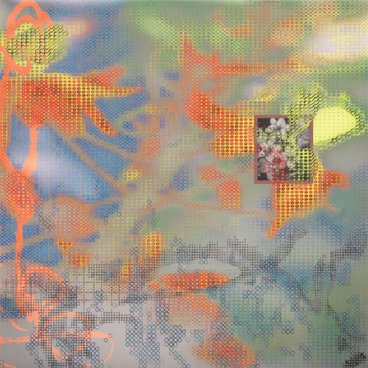
This wild second collaboration between French producer Simon Aussel and Egypt-based singer/poet/trumpeter Abdullah Miniawy is the latest installment in Dekmantel’s UFO series championing “ranky darkwave funk and industrial textures, jagged body music and overall destructive energy from the world’s most talented and tenebrous souls.” Notably, very few of those descriptors overtly apply for most of this particular album, as Dying Is The Internet feels like a bit of Trojan horse in which auto-tuned vocals, accessible songcraft, and big hooks transform subversion into a series of Arabic club-friendly bangers. That curious approach seems to fit the album’s philosophical intent appropriately, however, as the two artists envision the album as “reflection on the nature of club culture and digital fatigue” in which the internet has become “less about sharing ideas and more about surviving in a digital business ecosystem.” While I unsurprisingly have absolutely no idea what Miniawy is singing about as a functionally monolingual American, he certainly brings a visceral intensity to Simo Cell’s endlessly inventive and cutting edge techno visions.
The press release for this album describes Simo Cell as “a leading light in contemporary leftfield club music, twisting up adventurous rhythms and flamboyant production in pursuit of a perpetual freshness for the floor,” which feels accurate to me as a casual fan of his shapeshifting “bass-heavy minimalism” over the last few years, as the only real constants seem to be continually reinvention and a talent for razor sharp sound design. Abdullah Miniawy, on the other hand, is a bit of an enigmatic chaos element for me, as he is known as a singer, poet, trumpeter, author, and actor and his musical output has largely been a varied series of freewheeling and eclectic collaborations that blur the lines between techno, jazz, and Arabic music. On Dying Is The Internet, he is most prominently a vocalist, lyricist, and trumpeter, but he is also credited with composing the beatless, hallucinatory, and hazed out instrumental “Tear Chime.”
In keeping with that theme, my favorite pieces tend to be the more trumpet-centric ones like “Reels in 360” and “Travelling in BCC,” which feel like two separate dub variations of the same motif. On the former, a smoky trumpet melody floats across a slow, bass-heavy groove with periodic intrusions from a recurring vocal motif. It’s a strong melody, but the magic of the piece lies more on the production side, as Miniawy’s trumpet leaves hazy ghost trails in its wake and unexpectedly morphs into a shrilly distorted and pitch-shifted variation of itself at one point. Elsewhere, on “Travelling in BCC,” Miniawy’s melody is reshaped into a considerably more simmering, throbbing, and abstract context featuring insectoid hum, blown-out industrial textures, and visceral percussion. It has a smoldering and serpentine feel that suggests a dubbed-out guest performance by Jon Hassell at an intense early Tangerine Dream show in which an earthquake has caused the equipment to catch fire.
The vocal pieces are a bit more of a mixed bag for me, as the big, auto-tuned hooks often feel like they would not be out of place at an Arabic EDM festival for spring breakers, but a few pieces head in more of a stripped-down and menacing Brazilian Funk-style direction instead. The most striking example of the latter is the thudding and maniacal opener “I See The Stadium” in which auto-tuned chant-like vocals collide with Arabic rapping and feral-sounding rasps and gurgles from guest Lord Spikeheart, but it eventually settles into a more rolling mutant dembow groove.
While that one is a bit too over-the-top for my taste, I found a lot to love about “The Dala Effect” and “Living Emojis.” In “The Dala Effect,” Miniawy’s vocal hook obsessively repeats over a raucous shapeshifting groove that vibrantly squelches and thumps through a hallucinatory landscape of swooning psychotropic bird songs and explosive bursts of static. Elsewhere, “Living Emojis” combines a spatially active clapping rhythm with gnarly, strangled-sounding bass and a deconstructed chord progression to impressively visceral and kaleidoscopic effect. I especially liked how the last stretch was reduced to just a throbbing kick drum pulse.
While I suspect that it will mostly be the more dub-centric/instrumental pieces that I return to in the future rather than the “blow up the club”-style fare, Dying Is The Internet is nevertheless an impressively intense, inventive, and boldly original album. How much these songs resonate with fans will definitely be a matter of personal taste (and probably age as well), yet absolutely anyone interested in the art of electronic music production will probably have their mind repeatedly blown by Simo Cell’s virtuosic production techniques, as this album is a veritable explosion of cool ideas masterfully executed.
Listen here.