
Magic Tuber Stringband, “Heavy Water” (Thrill Jockey, 2026)
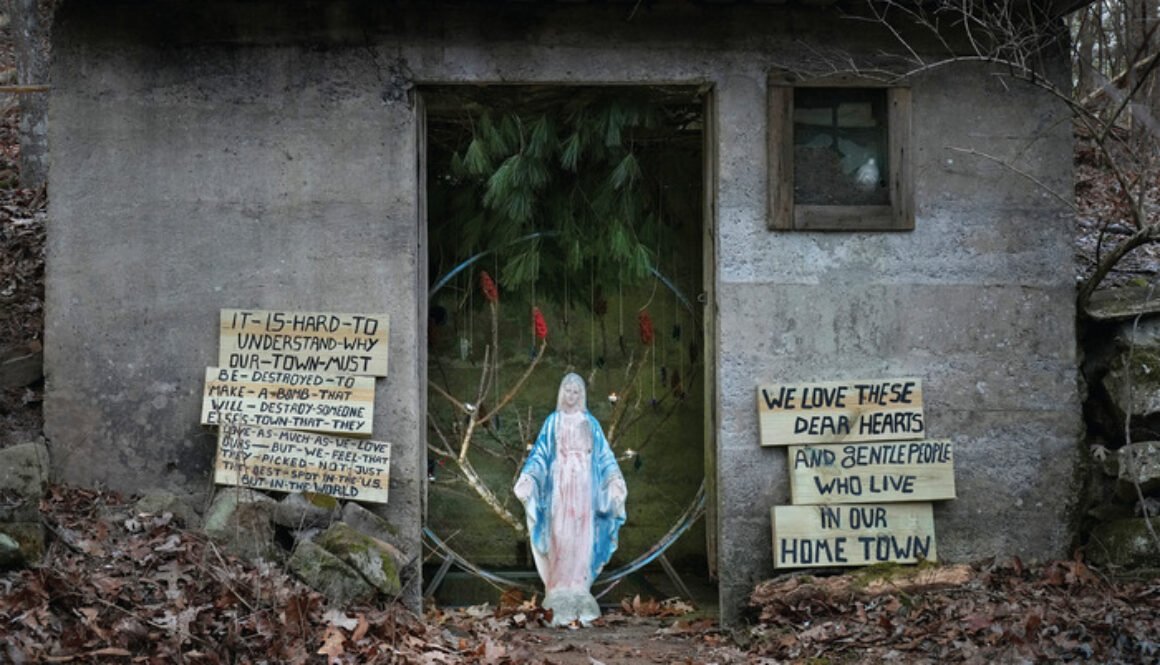
The latest album from this unconventional avant-folk project was inspired by fiddler Courtney Werner’s experiences working as an ecologist at the Savannah River Site in rural South Carolina. As Werner puts it, “Appalachia and the rural South are often caught up with a cliché, whimsical desire to ‘return’ to ‘better’ times – simpler, more wholesome, relaxing, quaint,” but Magic Tuber Stringband are far more interested in “the degradation and exploitation that permeates these landscapes and is smoothed over or repackaged in a palatable way in the preservation of their folk traditions.”
The hapless site of that degradation and exploitation in this case is the town of Ellenton, South Carolina, which was displaced in 1952 to make room for a plant that manufactured weapons-grade radioactive materials for nuclear weapons during the Cold War. While the plant eventually closed in the ‘90s, it left behind an ecological disaster, radioactive songbirds, and armed paramilitary groups who “frequently conduct combat exercises in remote areas of the site.” In short, a world of shit. While it is hard to imagine a more bleak outcome for a beloved town, Werner and her bandmates masterfully transform that deep sorrow into something beautiful by reanimating the ghosts of the past.
While Ellenton was not the only town that was wiped from the map to make way for the Savannah River Plant, it was the largest and its sad demise was lovingly memorialized by the Johnson Family Singers of Greensboro, NC with their 1951 song “The Death of Ellenton.” Fittingly, that piece surfaces in the Magic Tubers’ own “The Death of Ellenton,” as guest Oliver Child-Lanning stopped by the band’s recording session to provide live tape manipulations of that piece for the band to improvise against.
The former duo of just Werner and Evan Morgan (guitars, banjo, pump organ) was further fleshed out on this release with the new addition of third member Michael DeVito (bass, banjo, fiddle). Field recordist Jasper Lee was also involved, as he provided the sounds of “the train that passes through the ruins of Ellenton” that appear in “Sound of a Million Stars.” Notably, that piece borrows its title from an experimental work by Tomonari Nishikawa in which film was buried near Fukushima and purportedly transformed by the radiation in the soil. The train bit is also quite significant (albeit in a very different way), as the first half of the album has a cinematic feel akin to watching fields and forests roll by from the window of a passing train.
Aside from the brief and mesmerizing “Woodpeckers,” however, all of my favorite pieces fall on the album’s second half, as the songs stop feeling like a Wisconsin Death Trip-style soundtrack and start feeling like warmly beautiful conjurings of Ellenton’s former life. Notably, “Woodpeckers” is an inspired outlier in every sense, as it is essentially just a field recorded duet between the distant assault rifle fire of paramilitary militias and some of the titular birds hoping to make dubious new friends through a shared interest in percussive sounds.
For me, the album’s zenith is “Tribute to the Angels,” which is initially a bit of lovely freeform rustic fiddlin’ improv over a backdrop of brightly jangling and rippling acoustic guitars, but passes through a host of cooler, weirder, and darker stages that fleetingly evoke birdsongs, gnarled cacophony, and a dreamlike barn dance. The following pieces are similarly evocative of warm memories of small-town life, as “Where the Place Becomes Forgetting” feels like a beautiful summer wedding by a duck pond, while the disjointed abstraction of “Wintering Grounds” poignantly blossoms into an unexpectedly lovely hoedown.
There are a couple of other great pieces as well, but the real magic of Heavy Water lies in the warm and oft achingly beautiful sustained spell that these songs cast, as I often feel like I am an Ebenezer Scrooge-like voyeur bearing tearful witness to the vibrant life of a community that vanished seven decades ago. Given that, Heavy Water will definitely resonate with heartbroken fans of Henry Birdsey’s beloved and recently defunct Old Saw project, but Magic Tuber Stringband are elevated to an another plane altogether by Werner’s incredible violin playing: her lyrical melodies, spine-tingling dissonances, and visceral arsenal of squeals, creaks, snarls, and wild slides carve through these pieces like a fucking Appalachian Niccolò Paganini. Whether or not Werner made a Faustian bargain with the devil (or perhaps a radioactive bird) is anyone’s guess, but Magic Tuber Stringband certainly feel absolutely ecstatic and transcendent when they are at their best.
Listen here.