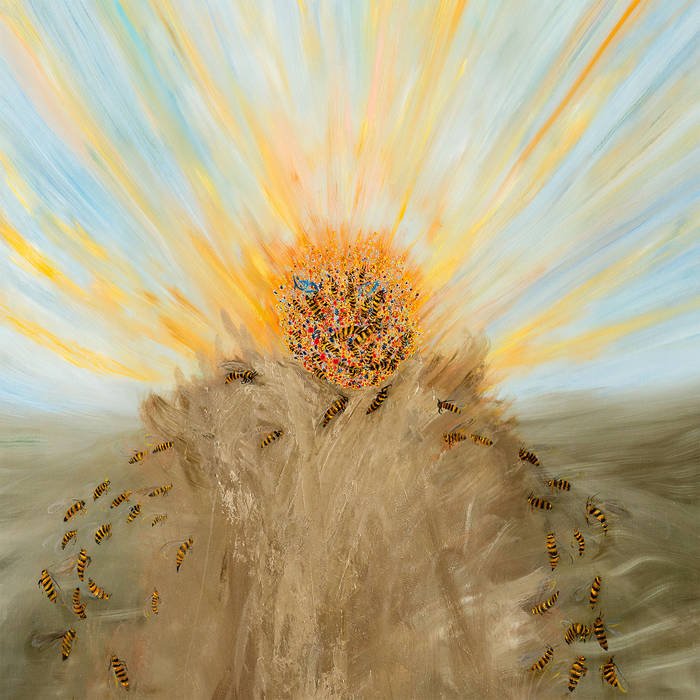
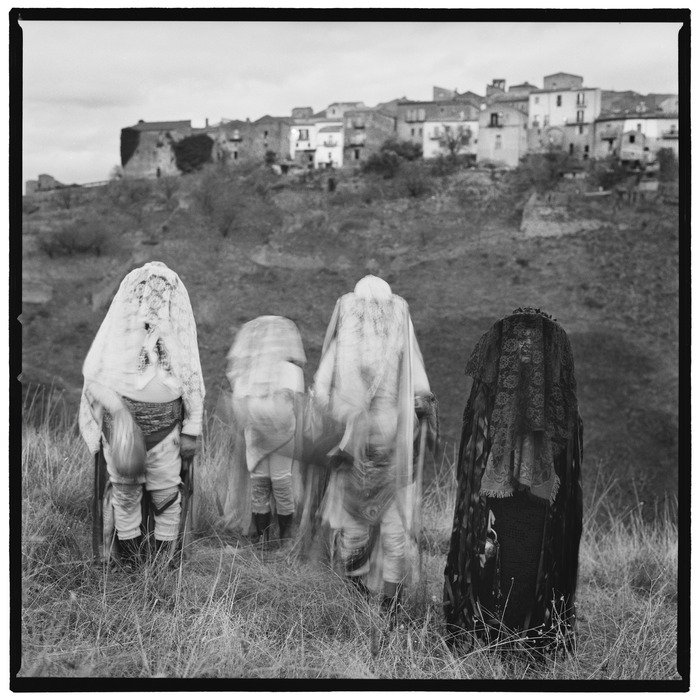
Holy Tongue, “Basilikum” (AD93, 2026)
This third full-length from the UK dub trio of Valentina Magaletti, Susumu Mukai, and Al Wootton feels like yet another creative leap forward for the project, which is quite impressive given that their previous album with Shackleton at the controls was an absolute banger. While Shackleton is absent this time around, his influence clearly lingers, as Holy Tongue’s own dub techniques seem noticeably sharpened. Notably, however, their focus has shifted away from psychedelic mindfuck territory into a more percussion-centric Fourth World vibe that recalls both 23 Skidoo and the “sci-fi tribal” era of Zoviet France if the two had access to current recording software and someone like Adrian Sherwood working their dub-wise studio magic behind the scenes. Aside from that, Basilikum is most notable for the presence of a couple of vocal tracks featuring Dali De Saint Paul, but the main course is unquestionably the many killer shapeshifting, dubbed-out “ritual percussion” grooves wrested from the trio’s arsenal of vintage drum machines.
The album begins with an interesting pair of comparative outliers, as the introductory “I’ve stood in this room for a long time before” is a collage-like affair built from a shuffling groove with animal-like growls, a broken music box-like melody, some dark jazz chords, and a stuttering vocal sample while lead single “Coca“ feels like a futuristic stream-of-consciousness rap battle backed with pounding drums, buzzing bass throb, yelps, and disorienting dub echoes. For me, however, Basilikum does not truly catch fire until the 23 Skidoo-esque third piece (“Orange 28”), which is essentially just a muscular post-punk bass line, a languorous Middle Eastern-sounding clarinet solo, and a whole lot of killer percussion with cool dub flourishes. While the bass line is unquestionably the anchor that holds everything together, the truly mesmerizing bit is the wild percussion tour de force, as the endlessly shifting drumming makes an incredibly vivid headphone experience. There is also some additional icing on the cake near the end, as a synth hook loops, smears, and distorts until it resembles the fluttering of a psychedelic bird.
That hot streak continues on in impressive fashion for the next two pieces. In the first (“Bloom in D Minor”), De Saint Paul returns to the mic in more sensuous and echoing fashion, but the lumbering and heaving jungle groove steals the show (along with a host of trippy touches like bird songs, curdled synth melodies, field recordings, and snatches of dialogue). For me, it evokes something between a Fourth World Carter Tutti Void and a giant malfunctioning metal snake, which is definitely a niche that I’d like to see explored further. Elsewhere, in “Vuoto 25,” the trio marry a throbbing sequencer motif with Indian hand percussion, murmuring chant-like loops, and a driving, muscular reggae beat. While the melodic focus is again Wootton’s clarinet, the most mesmerizing bits are how the vocal loops pan and pulse around the stereo spectrum and how the sequencer and drums seem to erratically drift in and out of phase with each other, which makes it weirdly thrilling whenever they briefly lock fully into sync. I also enjoyed how an underlying/buried 4/4 techno thump was revealed at the end when everything else finally fell away.
The album is rounded out with a brief interlude (“Roseroot”) of darkly jazzy piano and enigmatic voices and a pair of more substantial and idiosyncratic pieces. In “Single~Eyed,” a hallucinatory and sibilant jungle beatscape experiences a cacophonous and disjointed breakdown with a host of mangled sounds swirling around space and a looping vocal hook that is lysergically stretched and pulled apart. Unexpectedly, however, it somehow coheres into an outro that sounds like a mariachi band backed by an entire overzealous drum corps. The closing “Nature” undergoes a similarly leftfield transformation, as exhalation-like swells, rippling Middle Eastern autoharp melodies, and pitch-shifted R&B samples reverberate around space like a surrealist echo chamber designed by Giorgio de Chirico before cohering into a heaving and broken miasma of pounding drums and razor-sharp sound design. Again, however, there is a big surprise at the end, as the piece’s final moments transform into something resembling a haunted Spaghetti Western nightmare.
While my initial impression of this album was that it could probably benefit from more hooks and fewer clarinet solos (the album’s source material is all improvisatory), I have since come around quite a bit and now think that Basilikum is an absolutely mesmerizing headphone album. Moreover, I suspect the presence of hooks would have been a distraction from the nuances of what the trio were trying to do here, which was clearly to distill their vision into a series of wonderfully propulsive, shapeshifting grooves with trippy (yet subtle) dub effects. They succeeded beautifully, as Basilikum feels like a cool yin/yang sister album to The Tumbling Psychic Joy of Now: first, they opened a Pandora’s Box of maximalist psychedelia, then they proceeded to make something equally mesmerizing from little more than a pared-to-the-bone arsenal of vintage drum machines (and they absolutely fucking nailed it).
Listen here.